
How it works

kOUIvna follows a structured cycle: language is introduced, revisited and made visible over time. In practice, this combines short whole-class lessons with opportunities for regular revisiting and reflection. Optional individual practice is also available separately through kOUIvna Practice.
1. Preparing the lesson
Lessons can be prepared quickly using the kOUIvna platform by selecting and organising prepared content into a structured sequence of slides and activities. Slide selections can be prepared in advance or adjusted during the lesson, depending on the class and the teacher’s choice. Teacher notes provide concise guidance to support delivery within the lesson flow.
2. Introducing and revisiting language in class
New language is introduced in small, manageable steps during whole-class teaching using prepared slides with images, animations and audio. Lessons are short and focused, with an emphasis on listening, repeating and interacting together. Previously encountered language is revisited regularly within the same lesson cycle, so pupils continue to meet familiar language in new contexts over time.
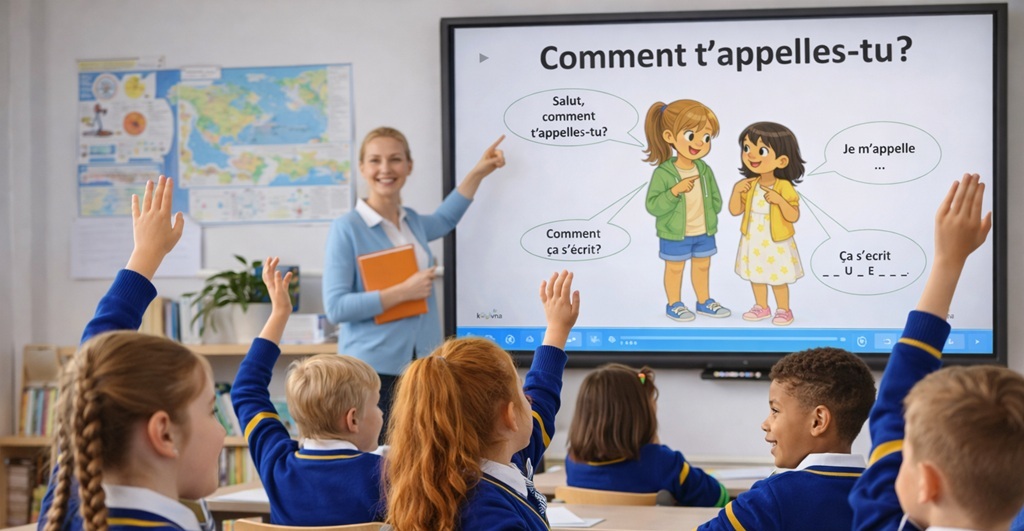
Animation and audio modelling provide scaffolding for listening and speaking activities.*
3. Supporting regular revisiting
Secure learning depends on regular encounters with language over time. The kOUIvna school programme supports regular revisiting through games, songs and selected activities available through the website.
For schools and families who would like additional individual practice, kOUIvna Practice is available separately through preconfigured kOUIvna devices. Pupils revisit the same core content while progressing at their own pace within defined boundaries. The app provides a simple overview of learning through indicators of what is new, in progress and secure.
4. Reflection and awareness
Pupils use a personal learning journal to record progress and reflect on what they have learned and what they can recognise or understand. Reflection is kept simple and age-appropriate, without grades or comparison. These four elements — lesson preparation, classroom interaction, regular revisiting and reflection — are repeated throughout the programme, forming a consistent cycle over time.
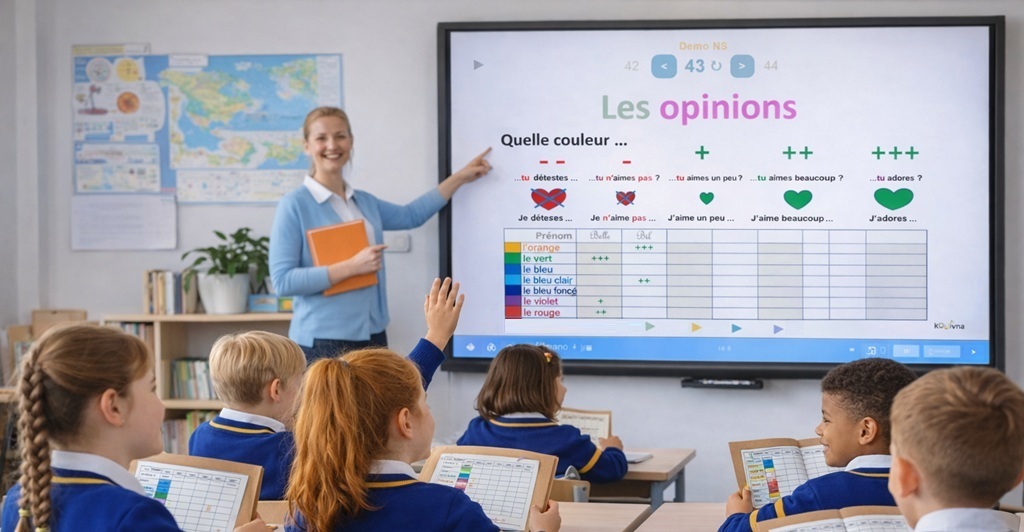
Learning journals help record progress, reflect on learning and support whole class communicative activities.*
A simple and consistent cycle: lessons are prepared, language is introduced in class, supported through regular revisiting, and reinforced through reflection.
Read the Feedback from teachers and families.
*For GDPR reasons, the images on this page are illustrative only. They are AI-generated and depict typical classroom scenarios.